
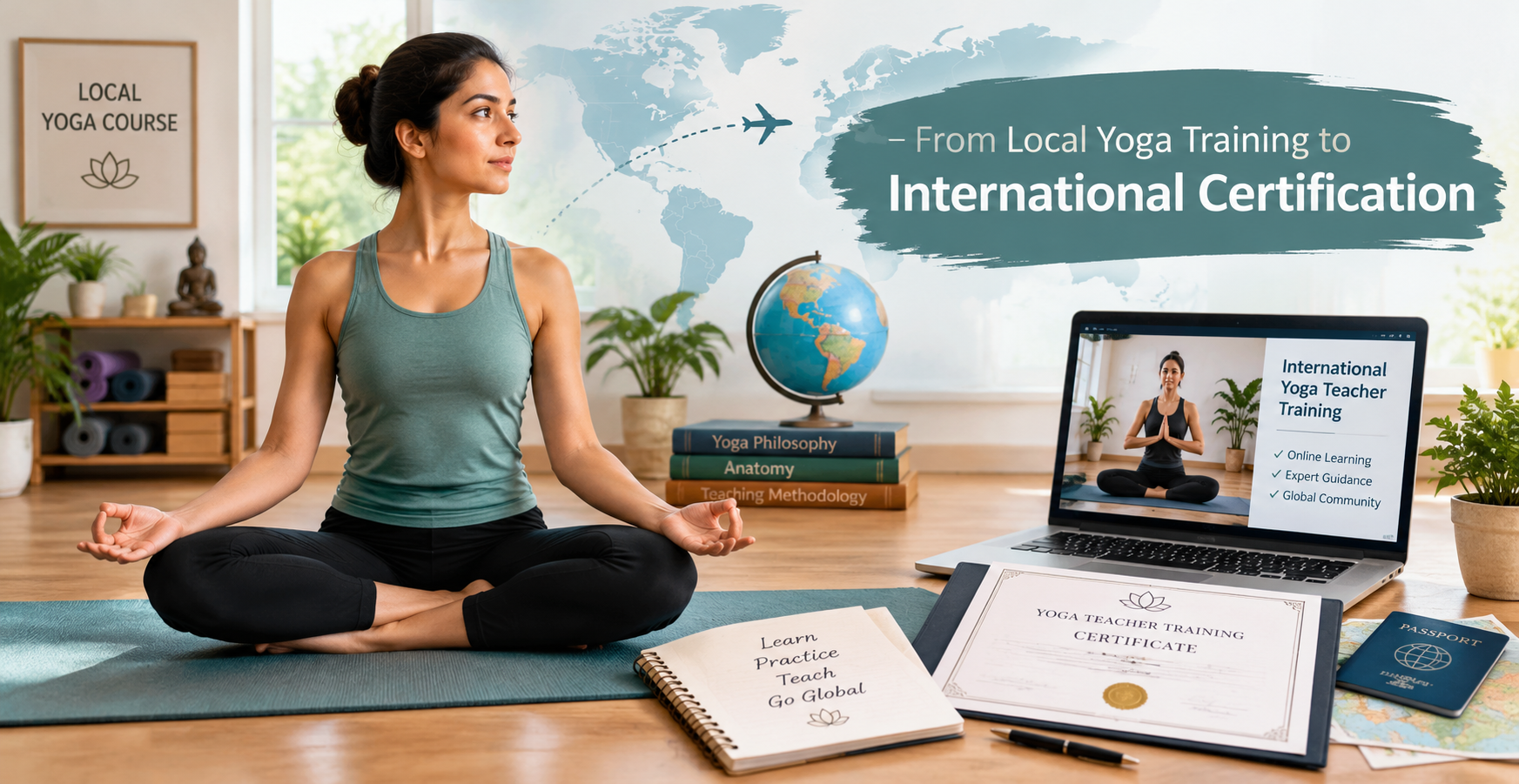
Yoga education helps individuals develop their knowledge and build a professional teaching career. Many people start with a local yoga course to learn basic postures, breathing techniques, meditation and yoga philosophy. After gaining experience, they may want to improve their qualifications and explore wider career opportunities. Understanding how to get international yoga certification after a local yoga course can help them choose the right training pathway.
International yoga teacher certification programmes provide structured learning, practical teaching experience and a deeper understanding of yoga principles. However, completing a local course does not automatically qualify someone for international certification. Applicants should check the eligibility criteria, training hours, curriculum and recognition offered by their chosen provider.
With proper guidance, regular practice and professional training, learners can strengthen their teaching skills and prepare for opportunities in the global yoga and wellness industry.
What Is International Yoga Teacher Certification?
International yoga teacher certification is a professional qualification awarded after completing a structured yoga teacher training programme that meets the requirements of a particular training organisation or certification body. These programmes are designed to develop both practical yoga knowledge and teaching abilities. They generally cover different aspects of yoga, including physical postures, breathing exercises, meditation, anatomy, physiology and traditional yoga philosophy.
An international yoga certification course may also include teaching methodology, class planning, student assessment and practical teaching sessions. These subjects help learners understand how to conduct safe and organised yoga classes for people with different experience levels. However, certification standards vary between organisations, so students should always check the course curriculum and recognition before enrolling. A recognised training pathway can strengthen professional knowledge, but it does not automatically provide permission to teach in every country.
Can You Get International Yoga Certification After Completing a Local Yoga Course?
Yes, you can pursue international yoga teacher certification after completing a local yoga course. A local course can provide the basic knowledge and practical experience needed to prepare for advanced professional training. However, completing a local certificate does not automatically qualify you for every international programme. Each training provider has its own admission criteria, so you should review these requirements before applying.
Your previous yoga education may help you understand the training curriculum more easily. Some schools accept beginners, while others prefer applicants who have completed foundational yoga training or have regular practice experience. Before enrolling, check whether your local course certificate, training hours and syllabus meet the selected provider's expectations.
Take the Next Step in Your Yoga Journey with YAI South America
Whether you are a yoga teacher looking for professional certification or a yoga school seeking certification, YAI provides opportunities to support your professional journey and recognition. Choose the relevant application below to get started.
School: https://form.jotform.com/250402319636452
Teacher: https://form.jotform.com/250700797178464
How to Choose the Right International Yoga Certification Course?
Choosing the right international yoga certification course is important for developing professional knowledge and building a successful teaching career. Different training providers offer programmes in various yoga styles, including Hatha, Vinyasa and Ashtanga. Before enrolling, compare the course curriculum, training hours, teaching methods and certification requirements. Select a programme that matches your current knowledge and future career goals.
You should also research the training school's reputation and instructors' qualifications. Check whether the school is certified with a recognised organisation, such as Yoga Alliance, if that registration is important for your goals. Read student reviews and understand the practical assessment process. Comparing course fees, learning formats and additional facilities can also help you make an informed decision.
Important Factors to Consider Before Enrolling
-
Accreditation and Recognition: Check the school's registration and certification standards. Confirm what the qualification represents and where it may be accepted.
-
Course Curriculum: Review subjects such as yoga philosophy, anatomy, asanas and pranayama. Ensure the programme includes teaching methodology and practical sessions.
-
Training Hours: Check whether the course offers 200-hour foundational or advanced training. Confirm whether your previous local training hours can be recognised.
-
Instructor Qualifications: Research the trainers' professional backgrounds and teaching experience. Experienced instructors can provide valuable practical guidance.
-
Learning Format: Choose classroom, residential or online training according to your needs. Confirm that the format meets the certification requirements.
-
Fees and Student Reviews: Compare the total course cost and facilities offered. Read genuine student feedback before making your decision.
What Are the Eligibility Requirements for International Yoga Certification?
The eligibility requirements for international yoga certification depend on the training provider, course level and certification organisation. Many foundational 200-hour yoga teacher training programmes accept beginners who have a genuine interest in learning yoga. However, advanced programmes may require previous yoga training, regular practice or teaching experience. Completing a local yoga course can provide useful preparation, but it does not guarantee admission to every international programme.
Most training providers require applicants to complete a registration process and submit relevant documents. These may include previous yoga certificates, training details, identity proof and a recent photograph. Some schools may also conduct an interview or practical assessment to evaluate applicants' knowledge and experience. Before applying, check the admission criteria and confirm whether your local yoga training meets the selected school's requirements.
Common Documents Required for Yoga Certification
-
Previous Yoga Certificate: Submit your local yoga course completion certificate, if available. It helps the provider understand your previous training.
-
Training Details: Provide information about your course duration, syllabus and completed training hours. These details may help determine your eligibility.
-
Application Form: Complete the registration form provided by the training school. Ensure that all personal and educational details are accurate.
-
Identity Proof: Submit a valid government-issued identity document. It may be required for student verification and registration.
-
Recent Photograph: Keep a recent passport-size photograph ready. Some providers require it for identification and course records.
-
Practice Experience: Share details of your regular yoga practice or previous teaching experience. This may be necessary for advanced training programmes.
How Many Training Hours Are Required for International Yoga Certification?
The training hours required for international yoga certification depend on the course level and training provider. A common starting point for aspiring yoga teachers is a 200-hour yoga teacher training programme. It covers yoga postures, pranayama, meditation, anatomy and yoga philosophy. These subjects help students develop essential teaching knowledge and practical skills.
Students interested in advanced learning can pursue additional training after completing the foundational programme. A 300-hour course provides deeper knowledge and further teaching practice. Some certification pathways combine 200-hour and 300-hour programmes to offer 500 hours of training. However, previous local course hours are not automatically transferable.
Common Yoga Teacher Training Levels
-
100-Hour Training: Introduces basic yoga concepts, postures and breathing techniques. It may support foundational learning but may not qualify students as yoga teachers.
-
200-Hour Training: Covers yoga practice, philosophy, anatomy and teaching methods. It is a common starting pathway for aspiring yoga instructors.
-
300-Hour Training: Provides advanced yoga knowledge and practical teaching experience. Applicants generally need foundational yoga teacher training first.
-
500-Hour Training: Combines foundational and advanced yoga education. It offers a broader learning pathway for developing professional teaching skills.
Where Can You Complete International Yoga Teacher Training?
You can complete international yoga teacher training in different countries, depending on your preferred learning environment, budget and yoga style. Many students choose destinations with established yoga communities, experienced instructors and structured training programmes. India, Nepal, Thailand, Indonesia and Spain are popular options for professional yoga education. Each destination offers different learning experiences, course formats and opportunities to explore yoga traditions.
Before selecting a location, research the training school's reputation, curriculum, instructors and certification standards. Check whether the programme includes practical teaching sessions, assessment and the required training hours. You should also consider accommodation, travel expenses and course fees when planning your training. Remember that studying in another country does not automatically make your yoga qualification internationally recognised.
Popular Destinations for International Yoga Teacher Training
-
India: Rishikesh, Mysore and Goa offer traditional yoga learning environments. Students can explore different yoga styles and established training programmes.
-
Nepal: Nepal provides peaceful surroundings for yoga education and meditation. Some training programmes combine practical learning with traditional yoga philosophy.
-
Thailand: Thailand offers yoga teacher training in wellness-focused and coastal locations. Students can find programmes covering different yoga practices and teaching methods.
-
Indonesia: Bali is known for its yoga studios, wellness retreats and international student community. It offers opportunities to study yoga in a retreat-style environment.
-
Spain: Spain provides yoga training options in a European setting. Students can explore different teaching approaches and connect with international yoga communities.
-
Online Training: Online programmes allow students to study from their own location. However, check practical assessment requirements and certification eligibility before enrolling.
What Is the Difference Between Local and International Yoga Certification?
Local and international yoga certification programmes can differ in their curriculum, training structure, assessment methods and professional recognition. Local courses often focus on foundational yoga knowledge and practical skills within a particular institution or community. International programmes may offer structured training pathways designed for students who want to develop professional teaching skills and explore opportunities in different countries. However, the quality and recognition of both types of certification depend on the training provider.
Another important difference is the certification standard followed by the training school. Some international programmes are aligned with organisations such as Yoga Alliance, which offers registration pathways for eligible schools and teachers. However, there is no single universal yoga teaching licence that guarantees permission to teach in every country. Before enrolling, check the qualification's recognition and understand the professional requirements of your intended teaching location.
Key Differences Between Local and International Yoga Certification
-
Training Structure: Local courses may follow institution-specific programmes. International courses may offer structured training with defined learning hours and assessments.
-
Curriculum: Local training often covers foundational yoga concepts. International programmes may include broader subjects such as anatomy, teaching methodology and yoga philosophy.
-
Recognition: Local certificates may be recognised within a limited network. International certification may support wider professional opportunities, depending on the organisation.
-
Training Hours: Local courses can have different durations and learning requirements. International programmes commonly offer structured 200-hour and advanced training pathways.
-
Teaching Opportunities: Local certification may support teaching within nearby communities and studios. International qualifications may help when applying for opportunities abroad.
-
Professional Development: Local courses can build basic knowledge and practical skills. International training may provide additional opportunities to improve teaching techniques and expand professional experience.
How Can You Start a Yoga Teaching Career After International Certification?
After completing an international yoga teacher training programme, you can explore different career opportunities in the wellness and fitness industry. Your certification can demonstrate your training and knowledge, while practical teaching experience helps you develop confidence and professional skills. You can begin by conducting practice sessions, assisting experienced instructors or applying for opportunities at yoga studios and wellness centres. Choose a teaching path that matches your interests, preferred yoga style and long-term career goals.
Building a successful yoga teaching career also requires continuous learning and professional development. Create a portfolio that highlights your certification, teaching experience and areas of specialisation. You can also develop an online presence through a professional website or social media profiles to connect with potential students. If you plan to teach internationally, research local employment regulations, visa requirements and any additional qualifications expected by employers.
Career Opportunities After International Yoga Certification
-
Yoga Instructor: Conduct group classes at yoga studios, fitness centres and wellness facilities. Help students improve their understanding of yoga practices.
-
Private Yoga Teacher: Offer personalised sessions based on individual goals and experience levels. Develop suitable classes for different student needs.
-
Online Yoga Instructor: Teach virtual yoga classes through online platforms. Connect with students from different countries and locations.
-
Yoga Retreat Instructor: Lead yoga sessions at wellness retreats and specialised programmes. Introduce participants to different yoga practices and techniques.
-
Corporate Yoga Trainer: Conduct yoga sessions for employees in workplace settings. Focus on movement, relaxation and general wellbeing.
-
Workshop Facilitator: Organise workshops covering yoga postures, breathing techniques and meditation. Share specialised knowledge with interested learners.
Get your internationally recognized yoga certification with authentic yoga standards in South America.
Conclusion
Getting international yoga certification after completing a local yoga course can help you strengthen your knowledge and develop professional teaching skills. Your previous training provides a useful foundation, but choosing the right certification programme is equally important. Before enrolling, research the training provider, curriculum, eligibility criteria, course hours and certification standards. Make sure the programme matches your learning needs and future career goals.
With regular practice, structured education and practical teaching experience, you can build confidence and prepare for different opportunities in the yoga and wellness industry. Whether you want to teach at yoga studios, conduct private sessions or explore international opportunities, professional training can support your journey. Continue improving your knowledge and teaching techniques to develop a rewarding and sustainable yoga teaching career.
Explore Our Recent Blogs
-
How Healthcare Professionals Get Yoga Certified in South America
-
How Fitness Instructors Can Get Yoga Certification in South America
-
Yoga Certification for Wellness Professionals in South America
-
Yoga Teacher Certification for Ayurveda Professionals in South America
Frequently Asked Questions
1. Can I Get International Yoga Certification Without Previous Teaching Experience?
Yes, many foundational international yoga teacher training programmes accept beginners without teaching experience. However, they may expect regular yoga practice and a basic understanding of yoga principles. Advanced programmes may require previous certification or practical teaching experience.
2. Is a Local Yoga Certificate Valid for International Yoga Teacher Training?
Yes, a local yoga certificate can support your application to an international training programme. However, acceptance depends on the school's eligibility criteria and admission requirements. Contact the provider to confirm whether your previous training is recognised.
3. Is Yoga Alliance Certification Internationally Recognised?
Yoga Alliance is an internationally known organisation that provides registration pathways for eligible yoga schools and teachers. Its registration can support professional credibility when applying for certain teaching opportunities. However, it does not guarantee employment or permission to teach in every country.
4. Can I Complete International Yoga Teacher Certification Online?
Yes, some training providers offer online yoga teacher certification programmes. These courses may include virtual lessons, practical assignments and teaching assessments. Check the programme's certification eligibility and practical requirements before enrolling.
5. How Long Does It Take to Become an Internationally Certified Yoga Teacher?
A common foundational pathway is a 200-hour yoga teacher training programme. The duration depends on whether you choose an intensive, part-time or online course. Advanced certification pathways require additional training and experience.
6. Can I Teach Yoga Abroad After Getting International Certification?
International yoga certification may help you apply for teaching opportunities in other countries. However, employers may have additional qualification and experience requirements. You must also meet the relevant visa, work permit and local professional regulations.