
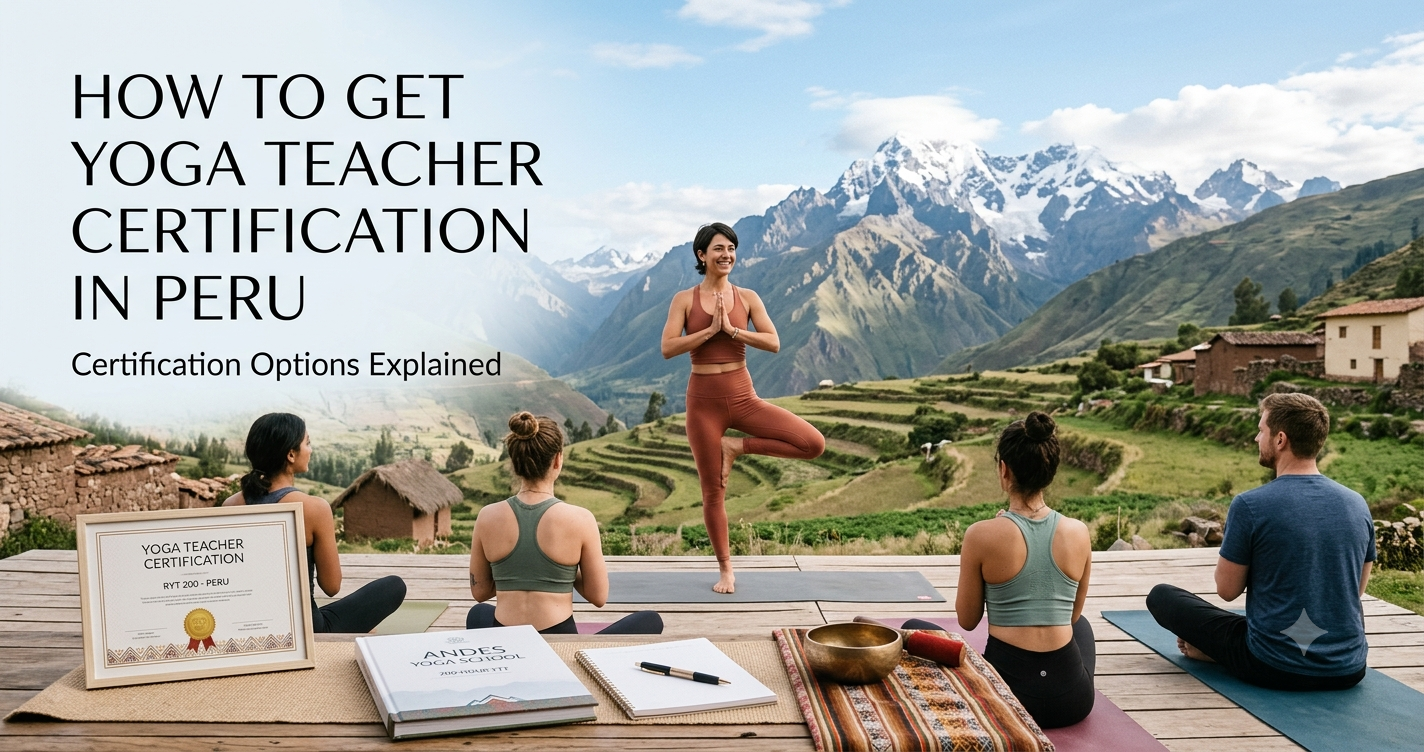
Yoga has become an increasingly popular practice in Peru, attracting people interested in physical wellness, mindfulness, meditation, holistic fitness, and professional yoga teaching. From well-established wellness communities in Lima to retreat environments in locations such as Cusco and the Sacred Valley, Peru offers unique settings for people who want to deepen their yoga knowledge and pursue trainer training. If you are thinking about how to get yoga teacher certification in Peru, the first step is understanding the special schooling and certification pathways available.
A high-quality programme should provide established schooling in yoga philosophy, asana practice, anatomy, teaching technique, meditation, ethics, and realistic coaching, as opposed to focusing mainly on bodily postures. This guide explains the foremost yoga certification options in Peru, how yoga trainer schooling works, what to search for in a programme, how long certification can take, and what you have to do before deciding on a certification provider.
What Are the Main Yoga Teacher Certification Options in Peru?
One of the most crucial questions for aspiring instructors is what sorts of yoga teacher training in Peru are available. Training alternatives can vary significantly in length, curriculum, teaching format, specialisation, and certification shape. Some programmes are extensive residential programmes, whilst others may be offered via scheduled lessons over several weeks or months. The suitable option depends on your prior yoga experience, professional goals, availability, and desired learning environment.
When researching yoga certification in Peru, students should distinguish between finishing a yoga path and receiving a recognised expert certification. A certificate has to ideally reveal that the scholar has completed a structured curriculum and met the programme’s evaluation or attendance requirements. Students who need to educate internationally need to also look at whether the certification is commonplace by studios, wellness corporations, retreat centres, or professional yoga businesses in their intended markets.
Common certification pathways to consider
-
Foundational Yoga Teacher Training: A foundational programme introduces college students to vital yoga standards, which include asana, pranayama, meditation, yoga philosophy, anatomy, and teaching strategies.
-
200-Hour Yoga Teacher Training: A 200-hour programme is a commonplace access-level pathway for aspiring professional yoga teachers.
-
Advanced Yoga Teacher Training: Students who’ve already finished foundational training can consider advanced programmes to extend their knowledge and teaching abilities.
-
Specialised Yoga Certification: Specialised programmes can focus on areas such as prenatal yoga, kids’ yoga, restorative yoga, meditation, yoga for older adults, or therapeutic applications.
-
Intensive Residential Training: Residential courses allow college students to immerse themselves in yoga training for a concentrated period.
-
Hybrid or Online Training: Online and hybrid programmes can offer extra flexibility for students who can’t attend a full-time residential path.
How Do You Become a Certified Yoga Teacher in Peru?
To become a certified yoga instructor in Peru, college students typically need to pick the best schooling programme, complete the desired curriculum, take part in practical periods, and satisfy the provider’s assessment or completion requirements. The exact process differs among firms, so college students have to assess the programme syllabus, trainer qualifications, duration, attendance expectations, evaluation strategies, and certification requirements before enrolling.
For a person studying how to get yoga teacher certification in Peru, deciding on a programme has to be primarily based on instructional quality rather than deciding on the shortest or most inexpensive course. A strong schooling review has to increase your capacity to recognize yoga principles and communicate them safely and efficaciously to college students. Teaching practice is mainly critical due to the fact that, in my view, understanding yoga and teaching yoga professionally require extraordinary skill sets.
Typical steps within the certification manner
-
Define Your Yoga Career Goal: Decide whether you need to train in recreational classes, teach at studios and retreats, develop private sessions, train across the world, or deepen your own practice.
-
Research Certification Providers: Compare schools, training companies, and certification programmes based on curriculum, school reviews, coaching style, duration, student guide, and certification requirements.
-
Check the Curriculum: Look for schooling covering yoga philosophy, anatomy and physiology, asana, pranayama, meditation, sequencing, coaching method, ethics, and practical coaching.
-
Complete the Required Training: Attend the specified periods and complete assignments, practical games, examinations, or coaching demonstrations as relevant.
-
Complete Supervised Teaching Practice: Practical teaching permits college students to expand self-belief in giving commands, demonstrating techniques, watching students, creating sequences, and coping with a class.
-
Receive Your Certification: After meeting the programme requirements, the provider may additionally issue a yoga instructor certificate. Keep your certificate and applicable education records properly.
How Long Does Yoga Teacher Training Take in Peru?
The period of yoga instructor training in Peru depends on the programme format and certification degree. Intensive residential programmes may also condense training into several weeks, whereas part-time programmes can extend over several months. A longer programme isn’t always automatically higher, but college students ought to make certain that the schooling gives sufficient time for theoretical mastery, practice, coaching technique, and supervised teaching.
When evaluating how to get yoga teacher certification in Peru, remember the mastering hours as well as the calendar duration. A path that appears brief can nonetheless contain vast training if it is fairly extensive, while a programme spread throughout several months may additionally allow more time for reflection and exercise. Students must pick an agenda that gives them enough opportunity to soak up the material rather than rushing through the curriculum to obtain a certificate.
What can affect the length of certification?
-
Training Level: Introductory programmes generally require much less time than advanced or specialised trainer schooling. More comprehensive programmes clearly require extra study and practice.
-
Programme Format: Residential courses usually involve extensive daily periods, while part-time programmes distribute the same sort of mastering throughout a longer calendar period.
-
Practical Teaching Requirements: Programmes that consist of supervised coaching, checks, lesson planning, and feedback may require time beyond regular hours; however, they can offer valuable professional guidance.
-
Specialisation: Additional qualifications in areas including prenatal, restorative, kids, or therapeutic yoga require separate, situation-specific schooling.
-
Previous Experience: Some superior programmes may additionally have conditions, such as preceding yoga instructor education or considerable non-public practice.
-
Assessment Structure: Programmes with written examinations, practical tests, assignments, and teaching demonstrations may additionally take longer to complete than courses based in large part on attendance.
What Should You Look for in a Yoga Certification Course in Peru?
Choosing a yoga certification path in Peru requires more than evaluating direction expenses and places. The quality of the curriculum, college, practical teaching opportunities, student support, and certification structure may have a major impact on your schooling. Before enrolling, request specific information about what you will actually study and how students will be evaluated.
A good education programme has to balance conventional yoga know-how with sensible teaching skills. Students have to research not only the most effective ways to carry out postures but also how to provide explanations, modify them accurately, create coherent sequences, speak honestly, and recognize primary protection concerns. If a programme makes vast expert or global recognition claims, confirm the claims directly before making a payment or commitment.
Key factors to evaluate before enrolling
-
Curriculum Quality: Check whether or not the programme covers asana, pranayama, meditation, anatomy, body structure, philosophy, ethics, sequencing, and coaching method.
-
Instructor Credentials: Research the academics leading the direction and their educational backgrounds. Look for teachers with full-time coaching experience and appropriate schooling within the subjects they teach.
-
Practical Teaching Experience: Ask how many supervised coaching students they have. Feedback from skilled teachers can help college students improve their communication, sequencing, remark, and class-management abilities.
-
Certification Details: Find out precisely what certificate college students acquire after completion and what requirements must be met. Avoid assuming that each certificate has the identical expert price.
-
Class Size and Support: Smaller institutions may additionally offer extra opportunities for personal feedback and interaction. Ask whether college students receive mentoring, assignment comments, or help after the programme.
-
Student Reviews and Transparency: Look for credible opinions and clear data on lessons, schedules, curriculum, cancellation regulations, assessment, and certification.
Is a 200-Hour Yoga Teacher Training in Peru Enough to Teach?
For many aspiring teachers, a 200-hour yoga instructor education represents an important basis for starting a teaching career. However, completing two hundred hours no longer means that every graduate is automatically equipped to teach every sort of student or every specialised form of yoga. Teaching competence develops through training, supervised practice, persistent mastery, reflection, and real-world experience.
If you’re learning how to get yoga teacher certification in Peru, particularly for expert coaching, consider your intended teaching surroundings. Someone making plans to guide widespread novice instruction may also want a unique academic pathway from someone intending to work with prenatal students, children, athletes, older adults, or humans looking for healing support. Additional education needs to be acquired whenever the teaching population calls for specialized knowledge.
What does a foundational programme have to prepare you to do?
-
Understand Yoga Foundations: You have to broaden a practical understanding of the most important yoga ideas, postures, respiration techniques, meditation, and applicable philosophical standards.
-
Plan a Yoga Class: Teacher education should assist you in shaping classes with the ideal beginning, progression, peak or critical recognition, and ultimate exercise.
-
Communicate Instructions: Teachers want to give clear verbal instructions that students can recognize without needless complexity. Effective communication is one of the most essential coaching skills.
-
Teach Safely: Training needs to introduce basic standards of alignment, adjustments, contraindication focus, and accountable coaching practices. Teachers have to remain within their level of competence.
-
Adapt to Students: An expert teacher has to realize that students have exceptional capabilities, stories, mobility tiers, and desires. Learning to provide appropriate versions is a vital part of teacher training.
-
Continue Professional Development: Certification is highly regarded as a basis rather than the end of education. Workshops, advanced training, mentorship, and private practice.
Where Can Certified Yoga Teachers Work in Peru?
After completing a suitable yoga teacher certification, teachers can discover one-of-a-kind professional environments depending on their capabilities, experience, and business model. Peru’s tourism and health sectors can create possibilities in studios, retreat centres, lodges, health centres, personal training, and network programmes. However, possibilities vary by town and business enterprise, and certification no longer guarantees employment.
Teachers inquisitive about constructing a profession need to take into account developing abilities beyond physical education. Communication, effective planning, customer service, digital marketing, social media, business management, and networking can all contribute to a sustainable yoga profession. International students have to additionally look at relevant immigration, work authorisation, tax, and expert requirements before accepting paid coaching positions in Peru.
Potential professional environments
-
Yoga Studios: Studios may additionally provide regular classes across unique styles and experience tiers. Teachers can gain valuable experience by working with many students and maintaining regular schedules.
-
Retreat Centres: Peru’s wellness and tourism environments may apply to instructors interested in retreats and immersive experiences.
-
Hotels and Resorts: Hospitality businesses occasionally incorporate yoga and health sports into guest experiences. Teachers ought to confirm employment terms and required qualifications with the company without delay.
-
Private Yoga Sessions: Certified teachers may also expand private coaching offerings based entirely on their capabilities and local demand. Private coaching can permit teachers to customise classes more carefully to personal desires.
-
Corporate Wellness: Some businesses offer wellness programmes that may encompass yoga, stretching, respiration, or mindfulness classes.
-
Online Yoga Teaching: Online instruction can extend a trainer’s ability to reach an audience beyond their nearby location. Teachers ought to nonetheless maintain appropriate professional standards.
How Much Does Yoga Teacher Certification Cost in Peru?
The cost of yoga teacher certification in Peru varies depending on the provider, programme period, region, accommodation, food, coaching format, path degree, and included materials. Residential programmes can be more expensive because lodging and other services can be included, even though non-residential or online programmes may also have exclusive pricing structures.
Rather than choosing a programme primarily based solely on its marketed charge, calculate the overall anticipated investment. Consider training, lodging, food, transportation, books, equipment, registration or administrative fees, and any additional workshops required in your expert dreams. A good provider should really explain what is included and whether there are additional costs before enrollment.
Costs you should compare carefully
-
Tuition Fees: Confirm whether the advertised rate covers the entire schooling or most of the educational issue. Ask about price schedules, deposits, and refund policies.
-
Accommodation: Residential programmes can also encompass lodging, but the quality and kind of lodging can range. Determine whether accommodations are shared or private and whether they're far from the centre and included in the quoted rate.
-
Meals: Some immersive programmes encompass meals, even as others require students to arrange their personal meals. This can appreciably affect the overall value of attendance.
-
Study Materials: Check whether manuals, books, devices, or online assets are covered. Additional materials may also increase the final price.
-
Travel and Local Transport: Students touring inside Peru or across the world should budget for transport to the schooling area. Local transfers can also be applicable for residential programmes.
-
Additional Training: Specialised workshops or superior certifications can also require separate charges. Include those prices whilst making plans for an extended-time-period yoga education price range.
How Can You Choose the Best Yoga Certification in Peru for Your Career?
There is no single best yoga certification in Peru for every student due to the fact that the right programme depends on your level, teaching dreams, favoured yoga culture, learning style, price range, and desired environment. Someone looking for personal improvement can also prioritise philosophy and immersion, while someone pursuing a professional coaching career can also place greater emphasis on anatomy, technique, supervised coaching, assessment, and expert training.
Before identifying, evaluate at least several programmes using the same standards. Review the curriculum, teachers, period, realistic necessities, certification, scholar support, general value, place, and popularity in the markets where you wish to work. If your long-term objective entails coaching outside Peru, investigate the expectations of studios and companies in those countries instead of assuming that one certification will meet every requirement.
A realistic decision-making checklist
-
Identify Your Goal: Decide whether or not your main cause is private growth, teaching regionally, building a worldwide profession, or developing expertise in a specific yoga discipline.
-
Assess Your Experience: Beginners may benefit from foundational trainer schooling, at the same time as skilled practitioners may be equipped for superior or specialized education.
-
Compare Teaching Styles: Review whether or not programmes focus on Hatha, Vinyasa, Ashtanga, Yin, restorative, conventional, or other approaches.
-
Review Practical Training: Prioritise programmes that provide opportunities to practise teaching and get constructive teacher feedback. Practical experience may be more valuable than theoretical information on its own.
-
Verify Certification Recognition: Ask potential employers or relevant expert companies what qualifications they recognise. Recognition can range among countries, employers, and coaching environments.
-
Consider Long-Term Development: Choose a programme that offers you a robust basis for persevering with education. Your expertise should be maintained after the preliminary certification.
Get your internationally recognized yoga certification with authentic yoga standards in South America.
Conclusion
Understanding how to get yoga teacher certification in Peru becomes much less difficult when you approach the process as an expert training selection in preference to simply looking for the quickest certificates. Peru offers exceptional opportunities, such as foundational teacher training, 2 hundred-hour programmes, advanced education, specialized publications, residential intensives, and flexible ways of gaining knowledge of codes.
The proper alternative depends on your previous experience, career dreams, preferred study environment, and the kind of college students you subsequently want to teach. Before enrolling, cautiously examine the curriculum, instructors, realistic teaching requirements, certification structure, total price, student guide, and potential expert popularity. If your purpose is to train the world over, study the expectations of the specific markets where you want to work.
Explore Our Recent Blogs
-
International Yoga Certification for Experienced Teachers in Cusco
-
How to Get Yoga Teacher Certification in Argentina: A Complete Guide
-
How to Get Yoga Teacher Certification in Brazil: Requirements and Process
-
How to Get Yoga Teacher Certification in Chile: A Step-by-Step Guide
Frequently Asked Questions
1. How do I get yoga teacher certification in Peru?
To reap yoga teacher certification in Peru, study appropriate education vendors, pick a programme that fits your interests and dreams, complete the desired curriculum, take part in practical teaching, and meet the issuer’s requirements in full. The exact certification process varies between companies. Always confirm the curriculum, trainer qualifications, assessment procedure, and certification info before enrolling.
2. Is yoga teacher training in Peru suitable for beginners?
Yes, beginners can find foundational yoga instructor training programmes designed to introduce the standards needed for coaching. However, individual providers may also have unique requirements concerning physical fitness or prior experience. Students must check the admission requirements before registering for a course.
3. How many hours are needed to become a certified yoga teacher?
A two hundred-hour programme is a not unusual foundational pathway for people in search of complete yoga trainer education. However, the wide variety of hours required can vary depending on the certification issuer and the extent or specialisation of training. Additional schooling may be suitable for instructors who need to work with unique populations or expand advanced capabilities.
4. Can I teach internationally after completing yoga certification in Peru?
A yoga certificate earned in Peru may additionally aid an instructor’s professional development; however, international acceptance depends on employers, expert companies, and local requirements. Teachers have to confirm the qualifications expected in the U.S.A. in which they intend to work. They also have to check immigration, employment, tax, and other legal necessities before coaching professionally overseas.
5. What subjects are taught in yoga teacher training?
A complete programme can also consist of yoga philosophy, asana, pranayama, meditation, anatomy and body structure, coaching methodology, sequencing, ethics, communication, and practical coaching. The stability among topics differs among carriers. Students need to request a detailed curriculum before selecting a certification path.
6. Is yoga certification enough to become a successful yoga teacher?
Certification presents an educational basis; however, professional fulfillment commonly calls for sustained practice, teaching experience, communication abilities, professional development, and the capacity to understand college students’ needs. Teachers may also gain from specialized education, mentorship, industry understanding, and marketing abilities. A certificate is therefore an important step; however, it has to be considered part of an extended expert journey.